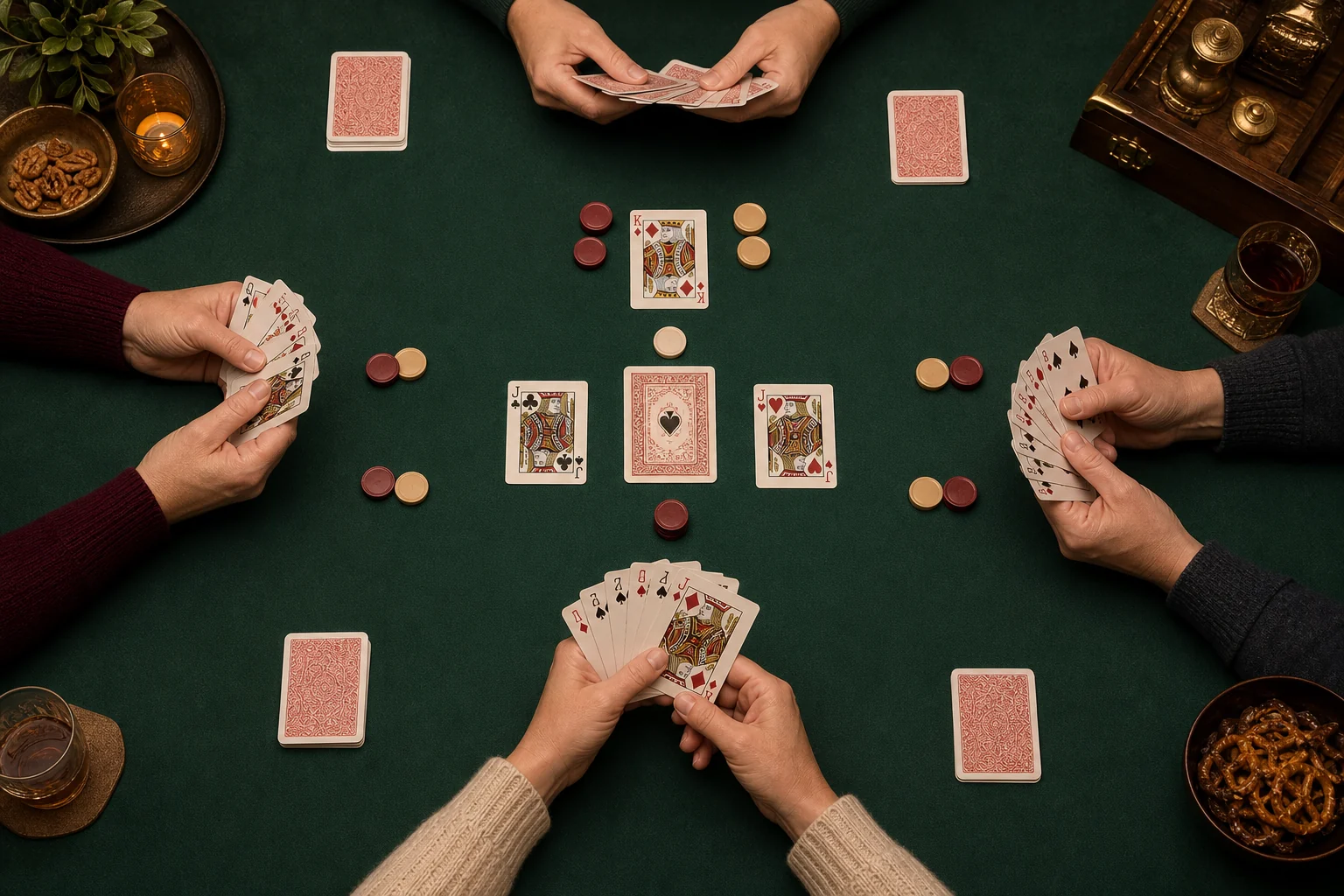
Bidding is where Pinochle asks whether you understand your hand or only like the look of it. The winning bidder takes control of trump and accepts the contract. That power is useful, but it comes with pressure. If the meld and trick points do not reach the bid, the hand can swing badly.
A good bid is not a wish. It is a practical estimate made from visible ingredients: meld, trump strength, aces, tens, kings, suit length, and partner help. You will never know everything before play begins, but you can learn to separate real strength from decorative cards.
Start With Trump Candidates
Before counting every possible point, look for suits that could become trump. A strong trump suit usually has length and high cards. A run is excellent because it offers both meld and control. Multiple high trump can pull opponents' trump and protect your side's counters. A short trump suit may still be usable if the meld is strong, but it leaves less room for mistakes.
If you cannot name a trump suit confidently, be careful. Some hands have scattered meld and a few aces but no suit that can carry the play. Those hands may defend well but bid poorly. The right to choose trump is valuable only if you can choose something that changes the hand in your favor.
Separate Meld From Trick Points
Meld is tempting because it can be counted before the uncertainty of tricks. But a bid still needs trick points. A hand with large meld and weak play may look like a bargain until the cards start moving. If your table requires the bidding side to take a minimum in tricks, this becomes even more important.
Estimate meld first, then ask where the remaining points come from. Aces can take tricks. Tens and kings can feed tricks your side wins. Trump can capture opponents' counters. If you cannot describe the source of the trick points, lower the bid or pass. The best bidders are honest with the uncomfortable half of the hand.
Respect Position and Partner
Partnership bidding includes information from more than your own cards. Your partner's bid, pass, or raise can suggest strength, but it is not a guarantee. Some tables use conventional signals; others play casually. Online public tables vary widely, so avoid assuming that a stranger's bid means the same thing your regular partner's bid would mean.
When you have a regular partner, bidding becomes a conversation. You may learn how aggressively they support, whether they value meld heavily, and how they handle borderline trump suits. Still, your own hand must carry its part. Partner help can improve a bid; it should not rescue a bid with no foundation.
Know When to Stop
One of the hardest skills is stopping. A bidding contest can pull players past the number their hand deserves. Raising because the opponent raised is not strategy. Ask what changed. Did you discover extra meld? Did your partner signal useful support? Did the table situation demand risk? If not, the next bid may simply be ego.
Passing can win points in the long run. Letting opponents take a difficult contract gives you the chance to defend, trap counters, and set them. A player who never passes becomes predictable and expensive. A player who passes well keeps the table honest.
Build a Simple Bid Checklist
Use a repeatable checklist until judgment becomes natural. First, name the best trump suit. Second, count secure meld. Third, estimate trick winners. Fourth, identify dangerous gaps. Fifth, consider partner and position. If the hand still supports the number after that checklist, bid. If it only survives because you hope every uncertain card works, do not force it.
This checklist is especially useful online because the pace can make players click quickly. A few seconds of structure prevents the most common mistake: confusing a hand with possibilities for a hand with a contract. Possibilities are not points until the cards prove them.
After You Win the Bid
Winning the bid is not the finish. It is the beginning of the obligation. Name trump with the whole hand in mind, not just the suit that produced the flashiest meld. After meld is counted, plan the first few tricks. Decide whether trump should be led early, where your counters can be placed, and how your partner may enter the lead.
The best bidding lesson is accountability. After each hand, compare the bid to what actually happened. Was the meld real? Were the trick points realistic? Did trump perform the job you expected? That review builds judgment faster than memorizing a chart. Try a few hands from the Pinochle Online homepage and ask those questions after every contract.