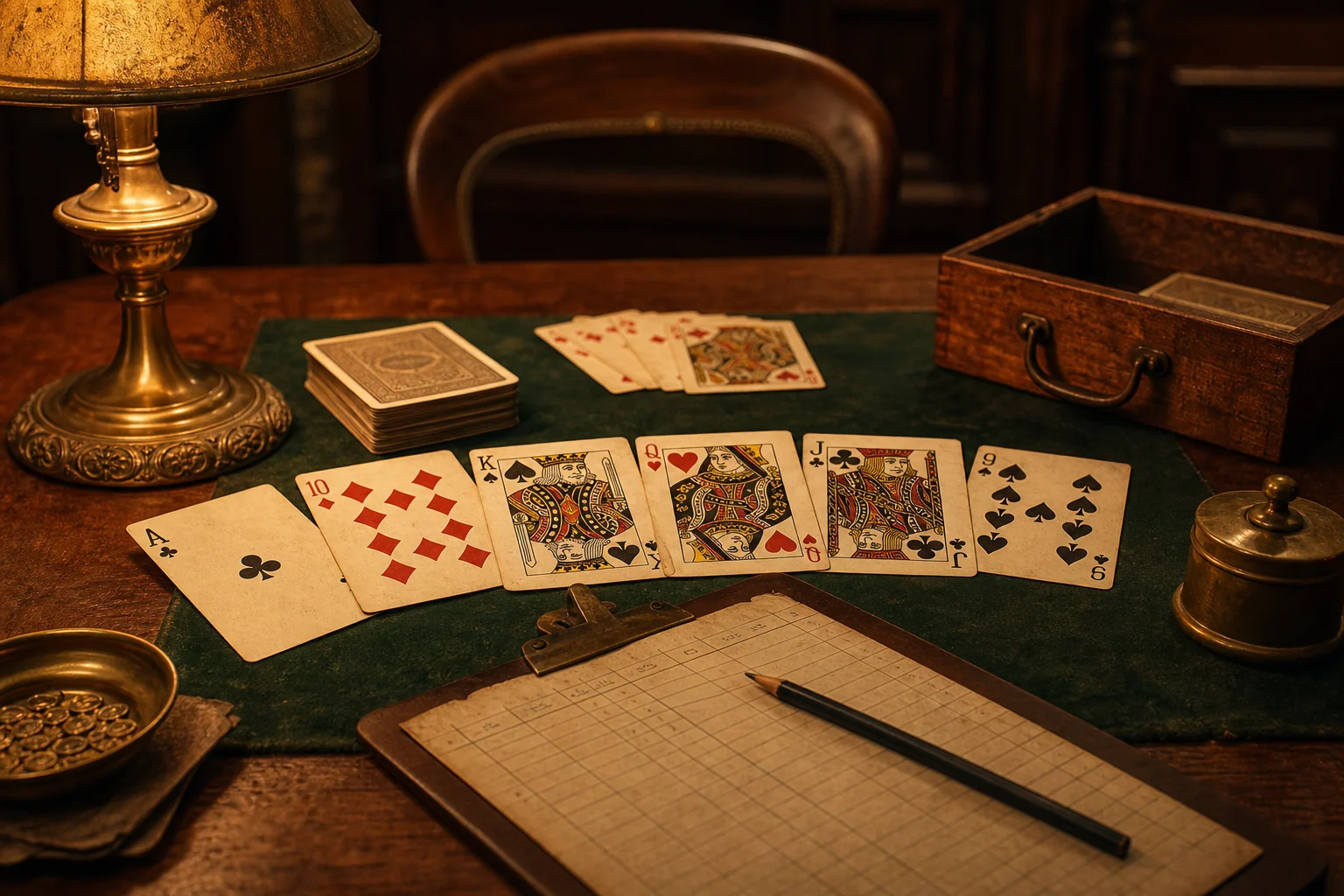
Pinochle grew from the same broad card-game soil that produced many European trick-taking games: ranking cards, naming trump, and reading a table where every player holds only part of the truth. The game took its recognizable shape in America, where immigrant card traditions mixed with partnership play and local scoring customs.
The unusual deck is part of the attraction. Instead of a full pack from two through ace, classic Pinochle uses repeated high cards: ace, ten, king, queen, jack, and nine in each suit. That compression gives every trick weight. A ten is not filler; it is a counter. A queen and jack can matter before the first trick is even led. A trump suit can turn a modest hand into a bid worth fighting for.
For generations, Pinochle belonged to kitchen tables, clubs, military posts, and long evenings where partners learned each other's habits. The bidding gave players a way to argue over strength before the play began. The meld rewarded memory and pattern recognition. The tricks tested nerve, timing, and table sense.
Browser play did not change the heart of the game. It removed the shuffling, the arithmetic disputes, and the wait for a full table. Online Pinochle can deal cleanly, score melds consistently, and let a player start another hand quickly. What remains is the old problem: make a promise with your bid, prove it with your meld, then take enough counters to justify the contract.
If you are ready to sit down at the digital table, start on the Pinochle Online homepage, then use the guide library when a rule or bidding choice needs a closer look.