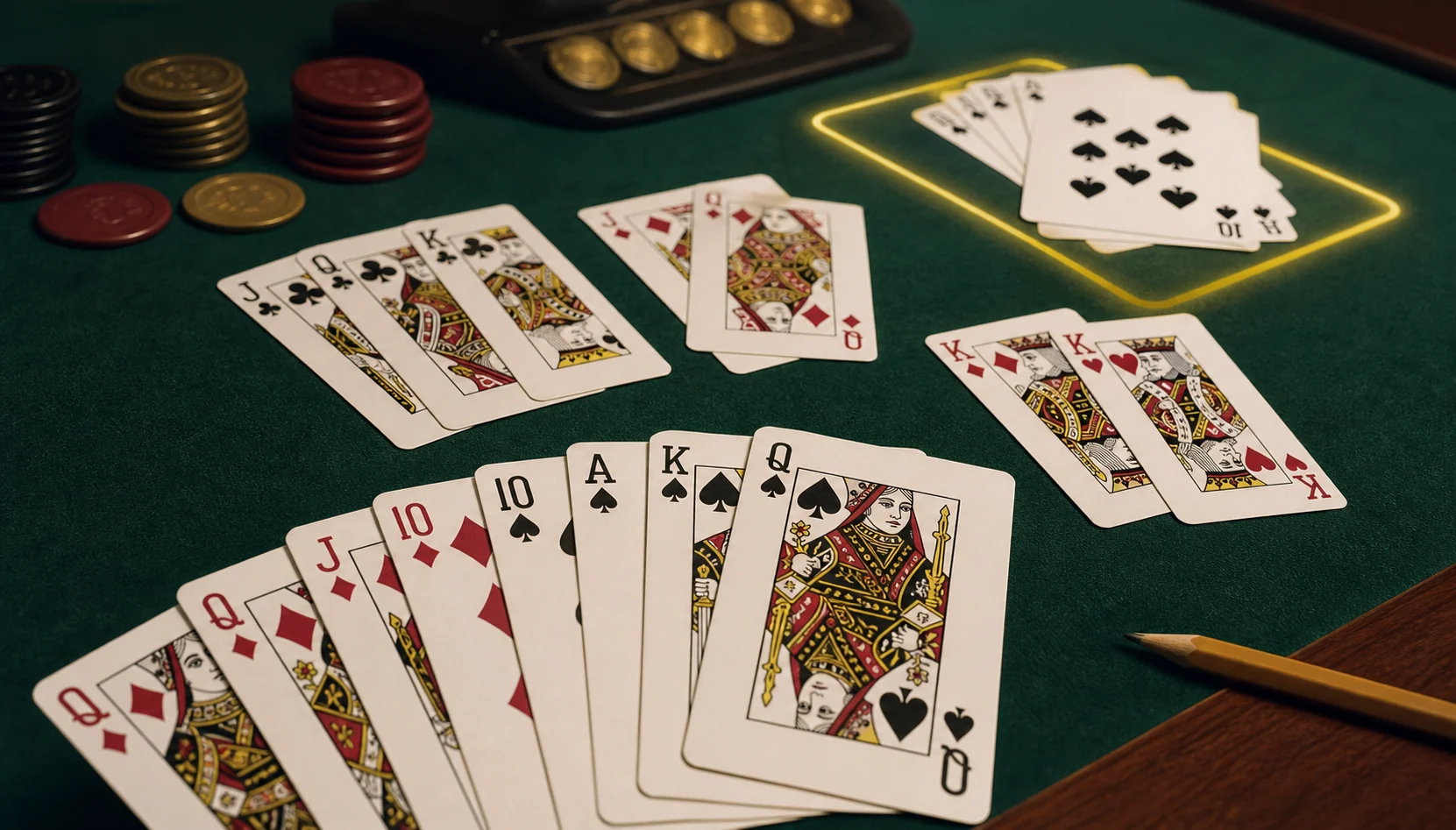
Strong Pinochle strategy begins before the first trick. The hand asks several questions at once: can you bid, can you name a useful trump suit, how much meld is real, and where will your trick points come from? Players who answer those questions in order usually do better than players who chase one pretty combination and hope the rest of the hand cooperates.
The most reliable approach is to connect your bid, meld, and play plan. If your bid depends on a trump run, your trick plan should explain how that trump suit will pull control. If your bid depends mostly on meld, you need enough aces and tens to avoid falling short in play. If your partner is likely to help, your leads should give them a chance to show it.
Bid With a Route, Not a Mood
A bid should have a route to the final score. Count likely meld first, then estimate trick points honestly. A hand with several marriages may look busy, but without aces, trump length, or clear control it may struggle. A hand with a strong trump suit and modest meld can be safer because it has a way to win the counters it needs.
Online tables move quickly, so build a short bidding habit. Sort by suit. Check for trump candidates. Count obvious meld. Look for aces and tens. Then ask whether the hand improves if you name trump. If the answer is vague, passing may be the best move. Good Pinochle players are not afraid of passing; they are afraid of paying for a contract that never had a path.
Use Trump to Control, Not to Show Off
Trump is the bidder's main tool, but it is easy to waste. Pulling trump early can be correct when you have length and want to remove defenders' weapons. It can also be wrong if it strips your own partner or burns the only cards that could rescue later tricks. The purpose of trump is control, not ceremony.
Before leading trump, think about what you are trying to accomplish. Are you protecting a run? Are you stopping defenders from cutting your side's aces? Are you forcing out a high trump before playing counters? A trump lead without a reason can turn a strong suit into a short one and leave the contract exposed.
Protect Counters Like They Are Cash
Aces, tens, and kings carry the weight in trick scoring. Throwing a ten into a trick your side is unlikely to win is one of the fastest ways to fall short. New players often unload counters because they want to reduce uncertainty, but Pinochle rewards patience. A counter saved for a controlled trick is worth more than a counter donated to the opponents.
That does not mean you should hoard every valuable card forever. If your partner is winning the trick, feed counters when it is legal and sensible. If you are winning with a high trump and expect the trick to stand, take the points. The art is knowing when the trick is secure enough. Watch what has been played, which suits are still dangerous, and whether the next player can cut in.
Read Partner Leads
Partnership Pinochle is not silent solitaire. Your partner's leads and discards tell you what they are trying to build. A lead from an ace may ask for counters. A trump lead may signal strength or a need to clear the suit. A strange low card may reveal that they are short somewhere and preparing to trump later.
Do not fight your partner's plan without a good reason. If they are winning a trick, support it. If they appear to be setting up a suit, pay attention before changing direction. Many lost hands come from partners who each play a private game while the opponents collect counters from the confusion.
Count What Matters
You do not need perfect memory to improve. Start by tracking aces, tens, and trump. If the ace of a suit has appeared twice in a double-deck situation, the suit's safety changes. If high trump are gone, small trump may become winners. If several counters are already captured, the contract may require bold play or careful defense.
Counting also helps defense. If the bidder needs many more trick points, do not hand them counters cheaply. If the bidder has already made enough, your goal may shift toward limiting damage or securing your own score. Strategy is not one fixed style; it changes with the bid, the score, and the cards already gone.
Finish the Hand Deliberately
Endgame mistakes are painful because there is no time to repair them. When only a few tricks remain, identify your sure winners, your dangerous counters, and your partner's possible entries. Lead cards that make the remaining tricks easier to predict. Avoid saving a counter for a trick that will never be yours.
The practical formula is simple: bid with a route, use trump for a reason, protect counters, read partner, and count the cards that change decisions. Practice those habits at the free Pinochle table, then return to the strategy after a few hands. The advice lands better once you have felt the pressure of a contract.